
When you are choosing hearing aids, the technology inside the device is important. However, the way those hearing aids are fitted can be just as important.
One of the most accurate ways to personalise a hearing aid fitting is Real Ear Measurement (REM), also called probe-microphone measurement. It is widely regarded as the gold standard for verifying hearing aid fittings because it measures what is actually happening in your ear, rather than relying only on an estimate.
At The Hearing Services Group, we use our clinical expertise and independent position to select the right fitting approach for each person. We are not tied to one manufacturer, so our advice focuses on your hearing loss, lifestyle and comfort.
What is Real Ear Measurement?
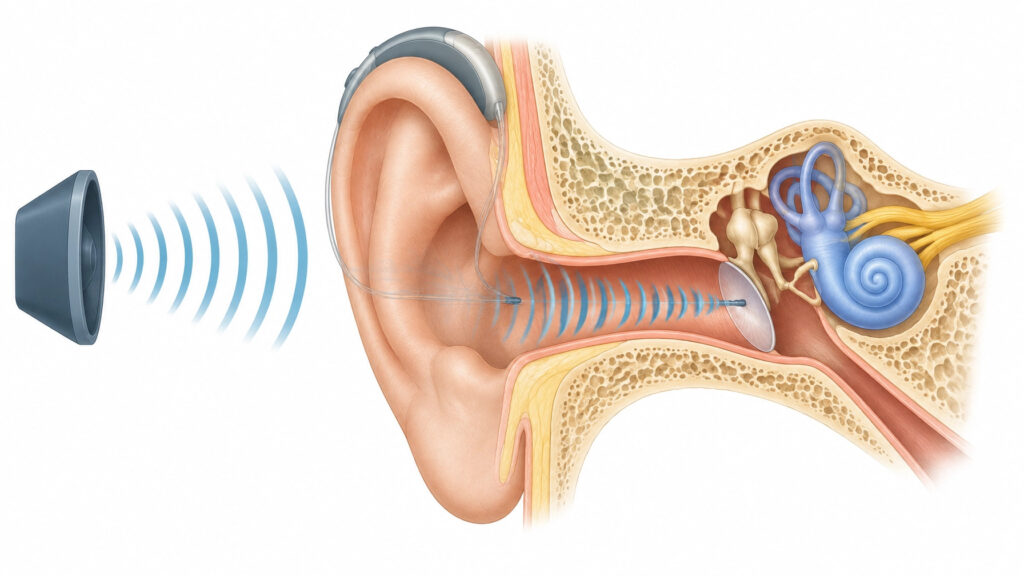
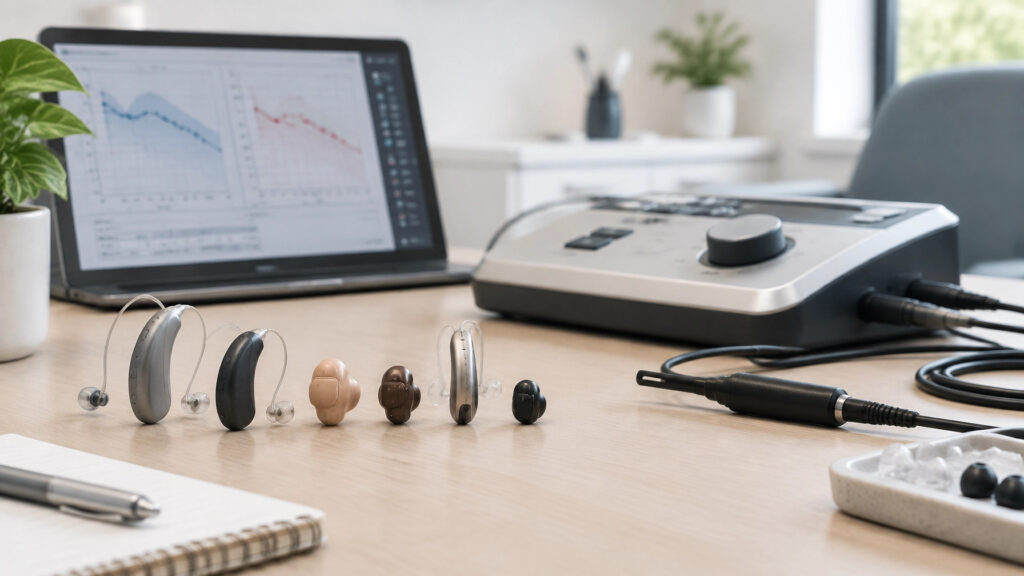
REM is a hearing aid verification test. It shows how much sound is reaching your eardrum while you are wearing a hearing aid.
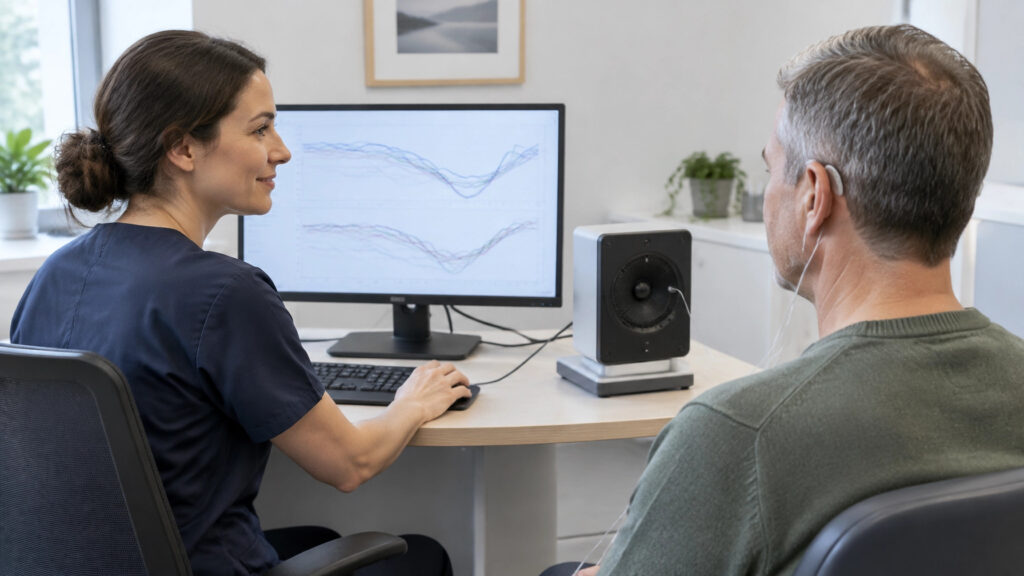
During the measurement:
- Your audiologist carries out an ear examination.
- A very thin probe tube is carefully placed in your ear canal.
- The hearing aid is positioned normally on or in your ear.
- Speech-like sounds are played through a loudspeaker.
- The probe tube measures the sound close to your eardrum.
- The measured response is compared with evidence-based prescriptive targets.
The probe tube does not block your ear, and the process is normally quick and comfortable. It allows the audiologist to see whether the hearing aid is providing appropriate amplification for your individual ear.
Why does REM matter?
Every ear is different. Ear canal length, shape and volume affect the way sound travels towards the eardrum.
Hearing aid fitting software uses your hearing test results to calculate a starting prescription. This is helpful, but manufacturer algorithms cannot fully predict the acoustic effect of every individual ear.
Without REM, a fitting may rely mainly on average ear measurements. With REM, your audiologist can check the actual result and adjust the hearing aid accordingly.
A well-verified fitting aims to help ensure that:
- Speech is audible at different listening levels.
- Important high-frequency speech sounds are not missed.
- Louder sounds remain comfortable.
- The hearing aid is not providing too little or too much amplification.
- You need fewer repeat adjustments after your fitting.
REM commonly includes several measurements:
- REUG, Real Ear Unaided Gain: the natural acoustic gain provided by your open ear canal without a hearing aid.
- REAR, Real Ear Aided Response: the sound level measured in the ear canal while the hearing aid is switched on.
- REAG. Real Ear Aided Gain:</strong> the amount of gain provided by the hearing aid in your ear.
These measurements help turn a hearing aid fitting from an estimate into a personalised, evidence-based process.
The British Society of Audiology guidance and professional audiology resources recognise probe-microphone measurement as an important part of hearing aid verification. Independent technical guidance from Auditdata also explains how REM can help clinicians verify hearing aid output and reduce unnecessary fine-tuning.
What does “AutoREM” mean?
Different hearing aid manufacturers use different names for their automated REM tools.
The basic idea is similar:
- The fitting software connects to compatible REM equipment.
- The system measures sound in your ear.
- The measured response is compared with prescriptive targets.
- The software automatically adjusts hearing aid gain towards those targets.
- The audiologist reviews the result and makes any clinical adjustments needed.
Automatic REM can make the process more efficient and consistent. However, it does not replace the audiologist. Correct probe tube placement, suitable hearing aid coupling, accurate audiogram information and professional judgement all remain essential.
How the major hearing aid brands handle automatic REM
The names and exact workflows can vary between software versions, equipment and regions. The following is a practical overview of the main manufacturer approaches.
Starkey: REM Target Match in Inspire
Starkey’s REM Target Match is built into its Inspire fitting software.
The workflow guides the clinician through probe tube placement and real ear measurements. It can measure the person’s individual REUG and then measure the REAR with the hearing aids switched on.
Inspire uses those measurements to automatically adjust hearing aid gain towards the selected fitting targets. The clinician can then review the curves and fine-tune the hearing aids where necessary.
This approach is designed to make fitting more personalised than relying on predicted values alone.
Phonak, TargetMatch in Phonak Target
Phonak calls its integrated REM function TargetMatch, which is included in Phonak Target fitting software.
TargetMatch provides a guided workflow for:
- Probe tube placement.
- Unaided real ear measurements.
- Aided measurements.
- Acoustic transformation measurements, such as REUG.
- Automatic or manual matching to prescriptive targets.
The fitting software and compatible REM equipment work together in one workflow. This can avoid switching repeatedly between separate programs while the clinician verifies the fitting.
Phonak TargetMatch is mentioned here to explain how the brand’s REM system works. The Hearing Services Group is an independent clinic and does not recommend hearing aids based on manufacturer affiliation alone.
Oticon: REM AutoFit in Genie 2
Oticon’s REM AutoFit is available within its Genie 2 fitting software.
It guides the clinician through the verification process and can automatically adjust gain to match the selected targets. It can support both gain-based verification and speech mapping, which measures the real ear aided response using speech-like signals.
A useful feature of Oticon’s approach is its compatibility with multiple REM systems. Genie 2 can work with suitable IMC2-compliant REM equipment, as well as Audioscan systems using VerifitLINK, subject to the relevant hardware and software requirements.
Oticon’s professional REM Cookbook explains why careful probe placement, calibration and consistent procedures are important.
Signia, Connexx AutoFit
Signia’s automated REM approach is called Connexx AutoFit.
Connexx can link with compatible REM systems and use real ear results to optimise the fitting towards the selected targets. Signia describes AutoFit as a way of automatically optimising real ear insertion gain without requiring the clinician to match every curve manually.
The system relies on compatible REM equipment and software standards, including IMC2 support. With Audioscan equipment, the integration may be referred to as VerifitLINK, depending on the system and configuration.
Automation can save time, but the audiologist still needs to check whether the fitting is appropriate for the person’s hearing loss, ear anatomy and listening needs.
ReSound, AutoREM in Smart Fit
ReSound’s AutoREM is available through ReSound Smart Fit when connected to compatible REM systems, such as suitable Otometrics equipment.
The system measures the hearing aid response in the ear and automatically adjusts gain towards the selected prescriptive targets. The results can then be reviewed in the fitting workflow.
ReSound’s automated approach is intended to improve consistency and reduce the amount of manual gain adjustment required. As with every manufacturer, the accuracy of the result depends on correct equipment setup and skilled clinical supervision.
Widex: Sensogram and clinician-led REM
Widex takes a somewhat different approach to automated fitting.
Compass GPS uses the Sensogram, an in-situ measurement that estimates hearing thresholds through the hearing aids. This can help produce an individualised starting fitting.
Compass GPS does not offer a branded automated REM integration in exactly the same way as the AutoREM, TargetMatch or AutoFit tools described above. In practice, the clinician will typically perform REM manually when probe-microphone verification is required.
That is not a disadvantage in itself. Manual REM allows an experienced audiologist to assess the measurements carefully and make considered adjustments. At The Hearing Services Group, our team is happy to carry out manual REM with Widex fittings when appropriate.
Is one brand’s automatic REM better than another?
Not necessarily.
Automatic REM tools are designed to improve efficiency and consistency, but they do not make one hearing aid brand universally better than another. A successful fitting depends on several factors, including:
- Your hearing test results.
- The type and severity of your hearing loss.
- Your ear canal shape and acoustics.
- The selected dome, mould or other coupling.
- Your lifestyle and communication needs.
- Your comfort preferences.The experience of the audiologist.
- How well the fitting is verified and followed up.
A computer can match curves. A clinician must decide whether those curves make sense clinically and whether the hearing aids sound comfortable and useful in everyday life.
Hearing aids from an independent clinic
The Hearing Services Group has more than 30 years of experience helping people find personalised hearing loss solutions.
At our Chalfont Hearing Services clinic, we offer hearing aids from a range of leading manufacturers, including newer models such as:
- Widex Allure AI
- Oticon Reveal
- Starkey Omega
- Signia models
- ReSound Sensia
We mention Phonak in this article only to explain how its TargetMatch REM function works. Our independent ownership means we are not biased towards one manufacturer. We can consider the complete range of appropriate hearing aids and recommend the option that best suits your hearing, lifestyle and budget. We also provide REM (Real Ear Measurement) across all of our clinics, not just at our Chalfont St Peter site.
We treat every client like family and provide support beyond the initial hearing assessment. We also accept all major insurers, helping to make the payment process simpler.
You can learn more about your options in our guide to the best hearing aids in the UK or visit our hearing aids service page
Book a hearing assessment in Chalfont St Peter
If you are considering hearing aids, a hearing assessment is the best place to start. It allows us to understand your hearing and discuss suitable options without relying on guesswork.
Our clinic is:
Chalfont Hearing Services
6 The Broadway, Market Place
Chalfont St Peter’s
SL9 9DX
FREE hearing screening test (worth £99)when booked online.
Book your FREE hearing screening test and speak with our friendly team about hearing aids, REM verification and personalised hearing care. We provide REM (Real Ear Measurement) across all of our clinics, so wherever you see us, this gold-standard verification service is part of our personalised approach.
Google Business Profile summary
FREE hearing screening test (worth £99) when booked online.
What is Real Ear Measurement (REM), and does it matter when choosing hearing aids? REM uses a thin probe tube in the ear canal to measure the sound actually reaching your eardrum. It helps an audiologist personalise your hearing aid fitting, check speech audibility and keep louder sounds comfortable.
Brands use different automated REM tools:
- Starkey: REM Target Match in Inspire.
- Phonak: TargetMatch in Phonak Target.
- Oticon: REM AutoFit in Genie 2.
- Signia: Connexx AutoFit.
- ReSound: AutoREM in Smart Fit.
- Widex: Sensogram, with manual REM typically performed by the clinician when required.
The Hearing Services Group is independently owned, with more than 30 years of experience. We offer personalised hearing aids from leading brands, including Widex Allure AI, Oticon Reveal, Starkey Omega, Signia and ReSound Sensia. We also provide REM (Real Ear Measurement) across all of our clinics, not just at our Chalfont St Peter site.
Visit us at 6 The Broadway, Market Place, Chalfont St Peter’s, SL9 9DX, or book your FREE hearing screening test online